2010-11-08
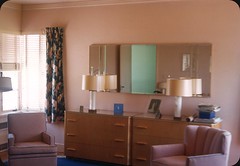
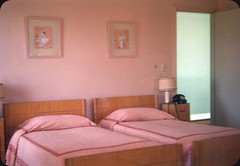
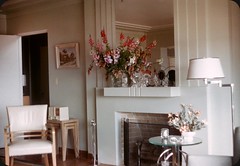

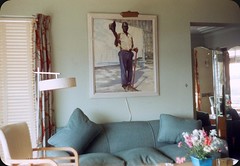
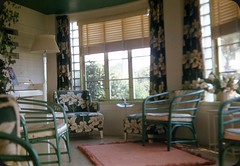
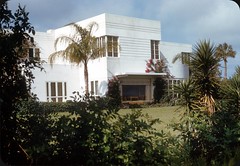
Streamline Modern Home – 1941
Streamline home at 941 Bay Esplanade, Clearwater Beach, FL. Home is currently for sale for $2.7 million.


2010-06-24
2010-04-09
Blizzard of 1950 — Xenia, Ohio

Blizzard of 1950 — Xenia, Ohio
Originally uploaded by ElectroSpark
© Original 35mm Kodachrome transparency
Do you have any other pictures of Xenia? Any year, it doesn't matter. If so, would you be willing to share those?"
Sure thing! Here's the rest of what I can find. Sorry to hear about the tornado...
- electrospark
Blizzard of 1950 — Xenia, Ohio
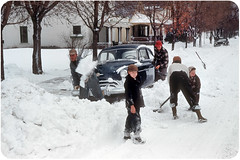
Originally uploaded by ElectroSpark
Digging out on Walnut Street.
© Original 35mm Kodachrome transparency
2010-01-22
Floral Map of Brussels at the 1958 World's Fair
Continuing on with the slides from the 1958 Brussels World's Fair — here's an amazing overview of the Fair looking towards the Porte de L'Atomium.
 The area to the left of the avenue is the Belgian Section. The large square building is the Buildings and Housings exhibit. The tall white structure with the colorful mural across Avenue de la Construction is the Glass, Ceramics and Terra Cotta industries pavilion. Next to that is Town Planning. Behind that, with the bright red roof is the Coca Cola building. The globe is part of the Solvay pavilion. The round building on the right, Brabrant Hall, had a impuvium roof which was visible through the glass walls. The curved blue structure on the right of the avenue is the sewing pavilion (Singer, Bernina/Orion).
On the far left, under the zig-zag walkway can be seen the Map of Belgium, a 1.3500 scale model with working parts. This is the Civil Engineering pavilion, and although you can't see it well from this angle, the building was a daring piece of work.
 The Civil Engineering building under construction, showing the walkway suspended by the cantilevered pylon.
 The relief map of Belgium, showing positions of chief public works (bridges, tunnels, etc). The map is spanned by a footbridge, 17 feet high, which was entirely unsupported from the ground. It was suspended by the Civil Engineering building's cantilever (see above), which rose to a height of 120 feet.
 Another view of the map (really a model!) showing considerable detail in craftsmanship.
 This area is now called Mini Europe and is thriving still under the shadow of the Atomium.
 A current look from the Atomium down on Mini Europe.
 England, France and many other countries are represented here. Official site here.
 The area to the left of the avenue is the Belgian Section. The large square building is the Buildings and Housings exhibit. The tall white structure with the colorful mural across Avenue de la Construction is the Glass, Ceramics and Terra Cotta industries pavilion. Next to that is Town Planning. Behind that, with the bright red roof is the Coca Cola building. The globe is part of the Solvay pavilion. The round building on the right, Brabrant Hall, had a impuvium roof which was visible through the glass walls. The curved blue structure on the right of the avenue is the sewing pavilion (Singer, Bernina/Orion).
On the far left, under the zig-zag walkway can be seen the Map of Belgium, a 1.3500 scale model with working parts. This is the Civil Engineering pavilion, and although you can't see it well from this angle, the building was a daring piece of work.
 The Civil Engineering building under construction, showing the walkway suspended by the cantilevered pylon.
 The relief map of Belgium, showing positions of chief public works (bridges, tunnels, etc). The map is spanned by a footbridge, 17 feet high, which was entirely unsupported from the ground. It was suspended by the Civil Engineering building's cantilever (see above), which rose to a height of 120 feet.
 Another view of the map (really a model!) showing considerable detail in craftsmanship.
 This area is now called Mini Europe and is thriving still under the shadow of the Atomium.
 A current look from the Atomium down on Mini Europe.
 England, France and many other countries are represented here. Official site here.
2010-01-17
Canadian Pavillion, Lumber and Glass — 1958 World's Fair
Here's some interior shots at various pavilions. The slides are unlabeled, and my knowledge of the 1958 Exposition is minimal at best, so some of these are unidentified.

 I love the tree (or lumber?) exhibit here. This could be in the Canadian Pavilion. Note the dominant color scheme at the fair: red, yellow and blue; much like the palette the Eames used in the 50s.
 A pair of visitors looking a a glass exhibit behind a fountain and sculptural wall.
 Glass Exhibit.
 Glass Exhibit.
 Canadian Pavilion interior. More yellows, blues and reds. The modernistic mural at the end of the second story deserves note. The large map of Canada on the left appears metallic.

 I love the tree (or lumber?) exhibit here. This could be in the Canadian Pavilion. Note the dominant color scheme at the fair: red, yellow and blue; much like the palette the Eames used in the 50s.
 A pair of visitors looking a a glass exhibit behind a fountain and sculptural wall.
 Glass Exhibit.
 Glass Exhibit.
 Canadian Pavilion interior. More yellows, blues and reds. The modernistic mural at the end of the second story deserves note. The large map of Canada on the left appears metallic.
2010-01-08
Brussels World Exhibition 1958 - Part 3
Happy New Year's! Wow, 2010 — we really are living in the future! And to follow that theme, I'm going to finish out the collection I have of the 1958 World's Fair for the next couple of posts. Enjoy!
 Looking towards the Atomium up Kongolan and Avenue Du Congo. The Belgian Congo and Ruanda-Urundi Hall (Government Pavilion) is on the left. Architect: G. Ricquier. "Five Department Stores" are on the right, by Le Soir. In one section were five showcases which depicted "Life in the year 2000." Any one have photos of this?
 The Belgian Congo and Ruanda-Urundi Hall (Government Pavilion) interior.
 Overview of the exhibition with the transport hall and the dyke at the Netherlands Pavilion. The theme of the Dutch exhibit was "The Struggle Against Water." If you've ever visited Amsterdam, you will be amazed at the network of canals and dykes.
 The interior 'polder' area (representing land below sea-level) of the Dutch Pavilion had an interesting dome-like building detailing the methods used to drain the land.
 From the 1958 Guide: "On the visitor's ear will impinge the joyful chimes proclaiming the happiness of the inhabitants of the Netherlands." Huh? Anyways, cool building.
 Looking towards the Atomium up Kongolan and Avenue Du Congo. The Belgian Congo and Ruanda-Urundi Hall (Government Pavilion) is on the left. Architect: G. Ricquier. "Five Department Stores" are on the right, by Le Soir. In one section were five showcases which depicted "Life in the year 2000." Any one have photos of this?
 The Belgian Congo and Ruanda-Urundi Hall (Government Pavilion) interior.
 Overview of the exhibition with the transport hall and the dyke at the Netherlands Pavilion. The theme of the Dutch exhibit was "The Struggle Against Water." If you've ever visited Amsterdam, you will be amazed at the network of canals and dykes.
 The interior 'polder' area (representing land below sea-level) of the Dutch Pavilion had an interesting dome-like building detailing the methods used to drain the land.
 From the 1958 Guide: "On the visitor's ear will impinge the joyful chimes proclaiming the happiness of the inhabitants of the Netherlands." Huh? Anyways, cool building.
2009-11-27
GM Powerama - Chicago 1955
 ©Original 35mm Kodachrome transparency
One of the largest GM Motoramas ever built, the September 1955 GM Powerama lasted 26 days and cost $7-million dollars (in 1955 dollars!) Held just south of soldier field, the fair included the first solar-powered electric car. You would think that maybe 54 years later, they would be in production by now?
 ©Original 35mm Kodachrome transparency
This is the same venue that hosted the Chicago Railroad Fair of 1950, described elsewhere on this blog.
 ©Original 35mm Kodachrome transparency
Despite the electric car debut, the main theme was DIESEL POWER!! Some over-the-top events included a tractor hoe-down with choreographed tractors square dancing, A bulldozer chorus line, a dumptruck chorus line, a Bulldozer vs. elephant event, a net-full of girls, a trapeze act, high dives into a giant dump truck, a Vegas-style stage show and more.
 ©Original 35mm Kodachrome transparency
A herd of 6 elephants approaching a waiting bulldozer. The lead one with the top-hat will challenge the bulldozer in a tug-of-war, and of course lose.
 ©Original 35mm Kodachrome transparency
The tractor hoe-down. Looks like a square dance with the men tractors wearing hats, and the ladies (with female drivers) wearing bonnets.
 ©Original 35mm Kodachrome transparency
 ©Original 35mm Kodachrome transparency
Lighter, lower, faster and costing less, the GM Aerotrain was ahead of its time. It rode on a bellows of air, and was fast - the center of gravity was very low. This is the first of two "Dream Trains" built, the T1. Again, somehow we lost interest. Love the styling! Designer: Chuck Jordan.

 ©Original 35mm Kodachrome transparency
The Regulus was the Navy's first sea-bourne nuclear deterrent. Essentially a small turbojet aircraft, 42 feet long, with a wingspan of 21 feet, and weighing in at just under seven tons, its Allison J33-A-14 engine could propel the missile to Mach 0.91 (about 550 knots). Either a 40-50 kiloton nuclear warhead or a 1-2 megaton thermonuclear device could be carried. POWERAMA!

 These last two images taken from Life magazines archives, located on Google here.
2009-11-23
USSR at the 1958 World's Fair in Brussels
 © Original Diapositive Kodachromes Fabriqué en France
The monumental Russian pavilion from 1958 as seen from the United States; the Saudi-Arabian/UAR/Arab Federation pavilion can be seen on the right. Measuring 500 by 240 feet wide, the USSR pavilion was created so that the outer walls were suspended by cables attached to eight pairs of steel supports. Impressive and sturdy, the central themes were technology, industry and transportation.
 The impressive entrance hall. This could be seen as the start of the cold war between Russia and America, or at the least, the beginning of the space race. One of the main features in this area was the Sputnik satellite, seen above and below. Launched in October 1957, the little beach-ball-sized satellite really caused a chain of events in America. In July 1958, Congress passed the National Aeronautics and Space Act (commonly called the "Space Act"), which created NASA. In fact, look at the US pavilion 6 years later at the '64 World's Fair - it is almost entirely space-related.
 Sputnik display and some other machinery (high-tech in 1958, no doubt.)
 He's so big, he's got to be great. Where is this statue today?
 I love this populist mural depicting patriotism. When other countries do this, we call it propaganda.
 I think this has something to do with polar exploration and ice-breaking technologies.
 A group of nuns pass by a display of Russian textiles.
 More "industry." My guess is these are state of the art electric drills. (I don't have good literature on this fair, and the official guide book is very brief and poorly translated.)
2009-11-21
United States Pavilion at Expo 1958 in Brussels, Belgium
I found a box of Expo 58 slides I hadn't seen in a while, and now have a new appreciation for this Expo. Officially called the Brussels World Exhibition 1958, it was the first postwar world's fair, and the architecture and optimism reflects that. The notable metallic Atomium, which still stands as an icon of the fair, is one of the most astonishing buildings of the world.
The United States Pavilion
 Architect: Edward D. Stone
The United States focused on "American Humanism" at the fair and portrayed the openess and plentitude of the American life. What was notably missing from the exhibit was the governments obsession with national security. In fact, American enthusiasm towards the fair was lackluster until plans for a monumental Soviet pavilion became public. Things moved quickly from there, and plans for a pavilion as large as the Roman Coliseum were soon finalized.
 There's a "typical" American beach here, with a sailboat, grill, outboard motor, people on lounge chairs.
 The theme was “Research for the Good of Humanity.” Culture and arts were stressed. The “Cicarama,” a 360° circular theater debuted here.
Subscribe to:
Posts (Atom)


 Posts
Posts

